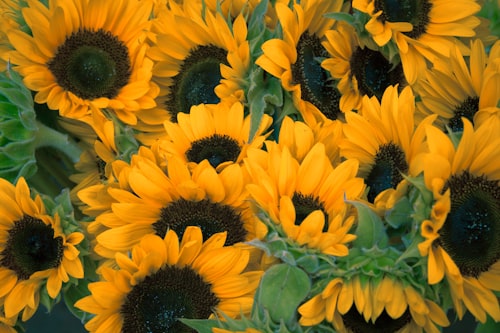
Few flowers are as universally beloved as the sunflower. Their enormous golden faces tracking the sun across the sky, their towering heights that make even adults look up in wonder, and their cheerful, uncomplicated beauty have made them a garden favorite for centuries. Whether you want to grow a living privacy screen, harvest nutritious seeds, or simply bring a slice of sunshine to your yard, sunflowers deliver joy in every form.
About Sunflowers
Sunflowers (Helianthus annuus) are native to North America, where they were cultivated by indigenous peoples for over 5,000 years as a food source. The name comes from their remarkable behavior: young sunflower buds track the sun from east to west during the day (a phenomenon called heliotropism), turning to face east again overnight. Once the flower opens, it remains facing east to attract pollinators with the warmth of morning sun.
Modern sunflowers range from knee-high dwarfs to towering giants over 12 feet tall, with flower heads from 4 inches to nearly 2 feet across. They come in traditional golden yellow, but also in lemon, orange, burgundy, bronze, and bicolors.
Choosing Your Sunflower
- Tall/Giant varieties: 'Mammoth' (10-12 feet, huge seed heads), 'Russian Giant' (8-10 feet), 'Titan' (12+ feet). Best for seeds, privacy screens, and making a statement.
- Medium varieties: 'Autumn Beauty' (5-6 feet, mixed autumn colors), 'Velvet Queen' (5-6 feet, deep burgundy). Good for cut flowers.
- Dwarf varieties: 'Teddy Bear' (2-3 feet, fluffy double flowers), 'Sunspot' (2 feet, full-sized heads on short stems), 'Big Smile' (1-2 feet). Perfect for containers and children's gardens.
- Pollen-free varieties: Bred for the cut flower trade. No pollen means no mess on your table. Varieties: 'ProCut' series, 'Sunrich' series.
Planting
Sunflowers need full sun — at least 6-8 hours of direct sunlight daily. They're not fussy about soil but do best in well-draining, moderately fertile ground. Avoid waterlogged areas.
Direct-sow seeds after the last frost when soil temperatures reach 55-60°F (13-15°C). Plant seeds 1 inch deep and 6 inches apart, then thin to the final spacing when seedlings are 3-4 inches tall. Tall varieties need 18-24 inches between plants; dwarfs need 12 inches.
Pro Tip
For continuous blooms over a long season, make successive plantings every 2-3 weeks from spring through midsummer. Each planting will bloom about 60-90 days after sowing, depending on the variety.
Watering
Once established, sunflowers are surprisingly drought-tolerant. Their deep taproot (which can reach 4 feet down) seeks out moisture that shallow-rooted plants can't access. Water seedlings regularly until they develop their taproot, then water deeply once a week during dry spells. Avoid frequent, shallow watering that encourages shallow roots.
Container-grown sunflowers need more frequent watering — check daily in hot weather. Use pots at least 12 inches deep for dwarf varieties to accommodate the taproot.
Supporting Tall Varieties
While sunflowers in sheltered garden spots often stand on their own, tall varieties in exposed or windy locations may need support:
- Stake with bamboo canes when plants are young, before they need it
- Plant in groups rather than singles — the plants support each other
- Choose sheltered spots against fences or walls for the tallest varieties
- Hilling soil around the base of the stem as the plant grows provides additional stability
Feeding
Sunflowers aren't heavy feeders. A layer of compost mixed into the soil at planting time is usually sufficient. Too much nitrogen produces tall, leafy plants with small flower heads. If your soil is very poor, a balanced fertilizer at half strength applied once during early growth is plenty.
Common Mistake
Starting sunflower seeds indoors and then transplanting them outside often fails because the taproot is easily damaged during transplanting. Sunflowers strongly prefer direct-sowing in their permanent location. If you must start early, use biodegradable pots that can be planted directly into the ground without disturbing the roots.
Harvesting Seeds
If you're growing sunflowers for seeds (for eating or bird feed), here's how to harvest them:
- Wait until the back of the flower head turns from green to yellow-brown.
- The seeds should look plump and feel firm when you press one.
- Cut the head with 6 inches of stem attached.
- Cover the head with a paper bag or netting to protect from birds as it dries.
- Hang in a warm, dry, well-ventilated spot for 2-3 weeks.
- When completely dry, rub the seeds out of the head with your thumb.
- For roasted seeds: soak in salt water overnight, drain, spread on a baking sheet, and roast at 300°F (150°C) for 30-40 minutes.
Sunflowers as Cut Flowers
For the longest vase life, cut sunflowers in the early morning when the buds are just beginning to open. Make the cut at a 45-degree angle and immediately place in warm water. Change the water every 2 days and recut the stems. Pollen-free varieties last 7-10 days in a vase; seeded varieties 5-7 days.
Common Problems
Birds and Squirrels
The biggest threat to sunflower seeds. Cover developing seed heads with netting or paper bags once the petals fall. For seedlings, use row covers until plants are established.
Downy Mildew
Yellow patches on upper leaves with grayish fuzz underneath. Caused by cool, wet conditions. Improve air circulation by proper spacing and avoid overhead watering.
Stem Breakage
Usually caused by wind or the weight of large seed heads on tall varieties. Provide support early and consider planting in sheltered locations.
"A sunflower is the garden's way of smiling back at the sky. It grows tall without arrogance, turns its face to the light without hesitation, and gives away its seeds without counting — a masterclass in generosity."